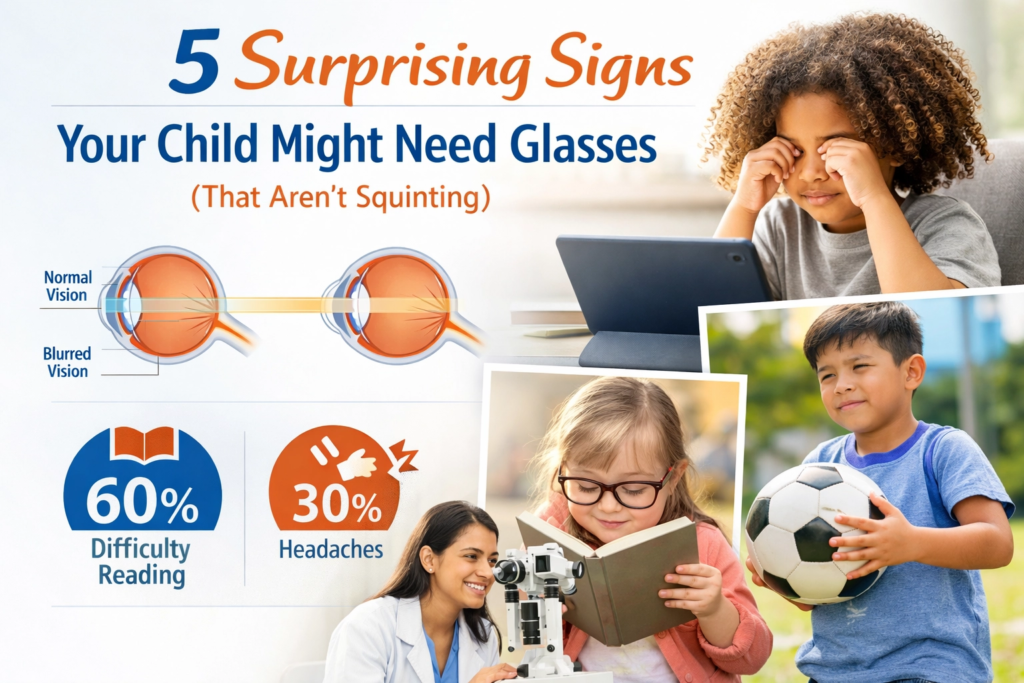
Did you know that 1 in 5 children has an undetected vision problem? That’s a staggering statistic: and most parents have no idea because their kids aren’t squinting or complaining.
Here’s the thing: children don’t always recognize when their vision isn’t normal. If they’ve always seen the world a certain way, they assume everyone else does too. That’s why it’s so important to look beyond the obvious signs and pay attention to subtle behaviors that could signal vision trouble.
Many parents are surprised to learn that glasses are often recommended even when children aren’t complaining, because kids naturally adapt to poor vision without realizing anything is wrong.
At Ophthalmology Associates, we treat both adults and children at our Suffolk, VA and Franklin, VA locations. We’ve seen thousands of kids over the years, and we can tell you from experience: some of the biggest warning signs have nothing to do with squinting at the chalkboard.
So let’s dive into five surprising signs your child might need glasses. In many cases, children don’t realize they need glasses because vision changes happen gradually and feel completely normal to them. When a child has always seen the world a certain way, they assume that’s how everyone sees it. That’s why these less obvious signs are often missed—and why recognizing them early can make such a meaningful difference.
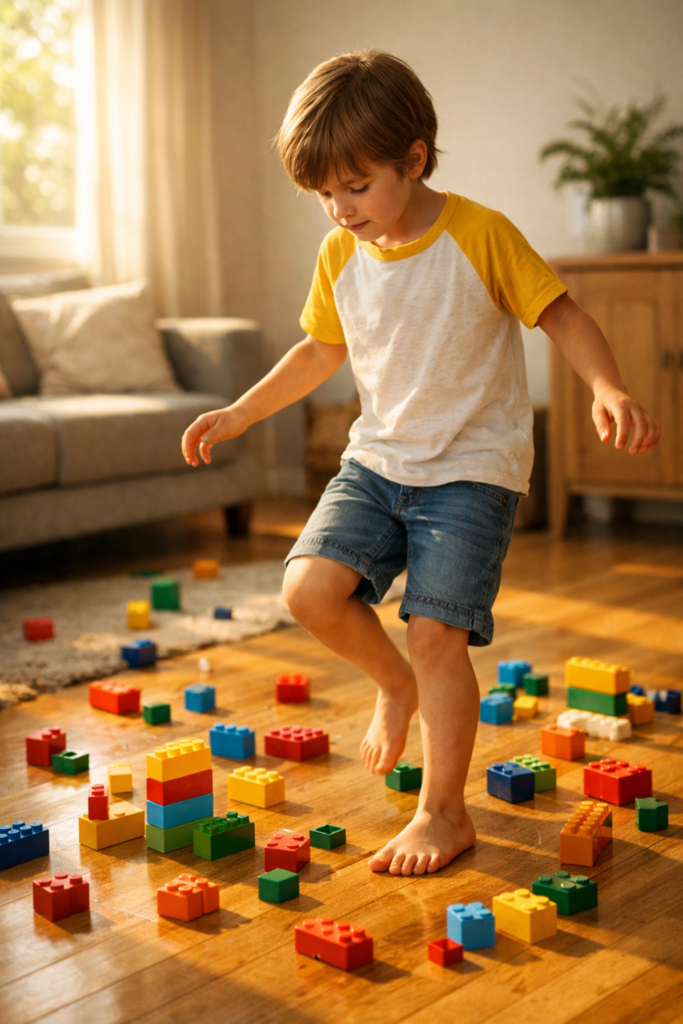
1. Your Child Is Clumsier Than Usual
If your child is constantly tripping over toys, bumping into furniture, or knocking over their juice cup at breakfast, you might chalk it up to being a kid. But frequent clumsiness can actually be a major red flag for a vision problem.
Poor depth perception, often caused by uncorrected nearsightedness, farsightedness, or astigmatism, can make it difficult for children to accurately judge distances. When vision isn’t clear, kids may misjudge where objects are, stumble more often, or struggle with coordination during everyday activities—and glasses are often the simple fix that helps them move with more confidence.
Here’s what to watch for:
- Tripping or stumbling more often than their peers
- Difficulty with sports that require hand-eye coordination (like baseball or basketball)
- Knocking things over or misjudging where objects are
When vision is corrected early, glasses often help children move more confidently and reduce unnecessary falls and coordination issues.
If you’re seeing this pattern regularly, it’s worth scheduling a comprehensive eye exam. Vision issues are incredibly common in children, and catching them early makes all the difference in their confidence and coordination.
2. They Complain About Headaches or Tired Eyes
When kids complain about headaches: especially after reading, doing homework, or screen time: most parents assume it’s just fatigue or maybe too much iPad time. But those headaches could be your child’s eyes working overtime to compensate for blurry vision.
Refractive errors like nearsightedness, farsightedness, and astigmatism force the eye muscles to strain constantly as they try to compensate for blurry vision. Think of it like flexing your bicep all day long—eventually, it’s going to hurt. When a child needs glasses, their eyes are often working overtime just to see clearly. For kids, that ongoing strain commonly shows up as:
- Headaches after reading or schoolwork
- Rubbing their eyes frequently
- Complaints that their “eyes are tired”
- Avoiding homework or reading because it feels uncomfortable
For many families, glasses quickly relieve these symptoms and make schoolwork and screen time far more comfortable.
This is especially common in children who are farsighted, because their eyes have to work harder to focus on things up close: like books, worksheets, or tablets. The good news? The right glasses can eliminate that strain almost immediately, making reading and schoolwork far more comfortable.
If your child mentions headaches more than once a week, especially tied to visual tasks, don’t ignore it. A quick visit to an eye doctor in Suffolk, VA or Franklin, VA can rule out vision problems and get them the help they need.
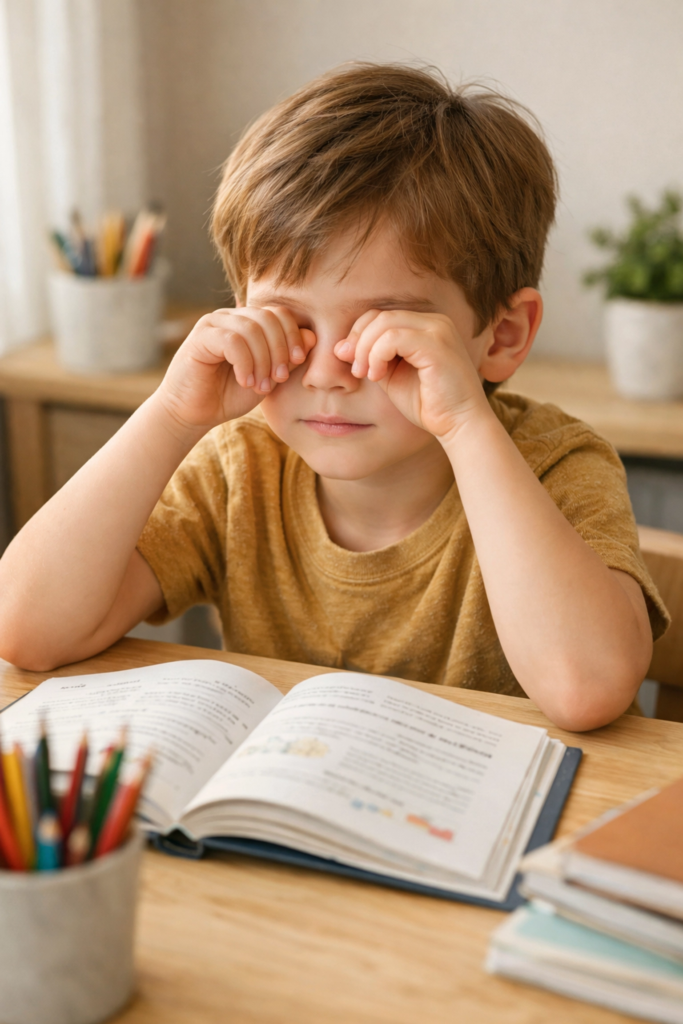
3. They Lose Their Place While Reading
Does your child use their finger to track every line they read? Do they skip lines, reread the same sentence, or lose their place constantly? You might assume it’s a reading issue or lack of focus, but it can actually be a vision problem.
When text appears blurry or distorted, it becomes extremely difficult for children to follow words smoothly across the page. They aren’t being careless or struggling with comprehension—they simply can’t see the text clearly enough to stay on track. In many cases, glasses reduce visual strain, make words clearer, and help children stay focused while reading.
Watch for these behaviors during reading time:
• Using their finger to track text (even after they’ve been reading for years)
• Skipping lines or reading the same line twice
• Complaining that the words “move around” or look fuzzy
• Tilting their head at unusual angles to see the page better
Head tilting is a big one. When kids tilt their head to one side while reading or watching TV, they’re often trying to compensate for blurred or double vision. It’s their way of adjusting to see more clearly: but it shouldn’t be necessary.
If you notice any of these patterns, book a pediatric eye exam. Many families in Suffolk and Franklin come to us because their child was struggling in school, only to discover that glasses solved the problem overnight.
4. They Close or Cover One Eye to See Better
This one is sneaky: but once you know to look for it, you’ll start noticing it everywhere.
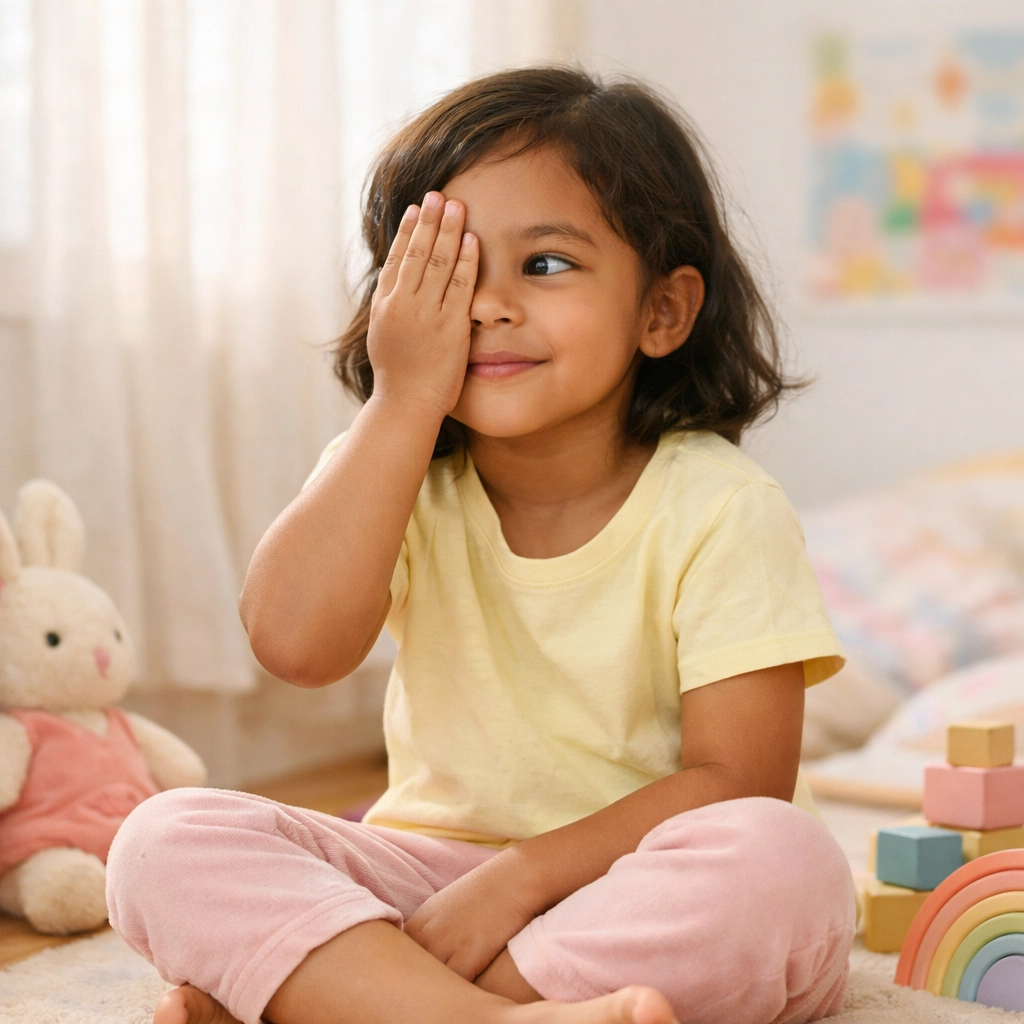
If your child frequently closes one eye or covers it with their hand while reading, watching TV, or looking at something in the distance, it’s a strong sign that one eye sees significantly better than the other. They’re essentially “turning off” the weaker eye to rely on the stronger one.
This behavior can indicate several conditions that affect how well the eyes work together. When one eye sees more clearly than the other, children may instinctively rely on the stronger eye to compensate for blurry vision, and glasses are often part of the treatment plan to help balance visual input between the eyes:
- Amblyopia (lazy eye): When one eye doesn’t develop normal vision
- Astigmatism in one eye: Causing blurred or distorted vision
- Strabismus (eye misalignment): Where the eyes don’t work together properly
The problem? If left untreated, the brain can start ignoring input from the weaker eye altogether: leading to permanent vision loss in that eye. The earlier we catch it, the better the outcome.
At Ophthalmology Associates, we specialize in pediatric eye care and can diagnose these issues quickly. If your child is covering one eye regularly, don’t wait: schedule an appointment at our Suffolk, VA or Franklin, VA office right away.

5. They’re Avoiding Activities They Used to Love
This one often goes unnoticed because changes in behavior don’t immediately seem vision-related. When children struggle to see clearly, they may quietly pull back from activities that feel frustrating or embarrassing. In many cases, needing glasses is the underlying issue, even though kids rarely know how to explain what they’re experiencing:
If your child suddenly doesn’t want to read anymore, avoids playing sports, or seems disengaged during activities they used to enjoy, it might not be a behavioral issue or lack of interest. They might be struggling to see: and they don’t know how to tell you.
Children are incredibly adaptive. If they’ve been dealing with blurry vision for months or even years, they learn to compensate. They might avoid activities that require clear vision because it’s frustrating or embarrassing, not because they don’t want to participate.
Look for these changes:
- Reluctance to read or do homework
- Avoiding sports or outdoor play
- Sitting very close to the TV or holding books inches from their face
- Difficulty concentrating in school or during activities
Over time, poor vision can affect a child’s confidence, academic performance, and social development. According to the American Optometric Association, undetected vision problems in children can affect reading, attention, and classroom performance. But here’s the good news: glasses can turn everything around. We’ve seen kids go from struggling in school to thriving: all because they could finally see the board clearly.
Why Glasses Can Make a Bigger Difference Than Parents Expect
Many parents assume that glasses are only necessary when a child is clearly struggling to see the board or complaining about blurry vision. In reality, children are incredibly adaptable, and many learn to work around vision problems without realizing anything is wrong. Over time, that constant compensation can affect reading, focus, coordination, and overall confidence.
Glasses help correct vision issues that interfere with how a child processes the world around them. When children can see clearly, everyday tasks like reading, playing sports, walking through crowded spaces, and paying attention in class become far less tiring. Parents often notice improvements not just in academic performance, but also in mood and engagement once glasses are introduced.
It’s also important to understand that vision can change as children grow. Even kids who passed a previous screening may need glasses later as their eyes develop. Regular eye exams ensure that glasses are prescribed at the right time, preventing unnecessary strain and helping children perform at their best both in and out of the classroom.
When to See an Eye Doctor in Suffolk or Franklin
So when should you actually schedule an appointment? Here’s our recommendation:
See an eye doctor if your child:
- Exhibits any of the signs above regularly
- Has a family history of vision problems (nearsightedness, farsightedness, astigmatism, or lazy eye)
- Hasn’t had an eye exam in over a year
- Is struggling academically or socially in ways that seem out of character
The American Academy of Ophthalmology recommends that all children have a comprehensive eye exam by age 3, and then again before starting kindergarten. After that, annual exams are the gold standard: especially during the school years when vision changes rapidly.
At Ophthalmology Associates, we make pediatric eye exams easy, comfortable, and stress-free. We know how to work with kids of all ages, and we’ll take the time to make sure your child feels at ease during the entire process.
Learn more about our pediatric eye care services and how we help children see clearly and comfortably at every stage of development.
We offer same-day contact lens prescriptions and in-house eyeglass prescriptions, so you can get your child the vision correction they need right away. We accept 95%+ insurance plans, making quality eye care accessible to families throughout Hampton Roads.
How to Book Your Child’s Eye Exam
Ready to schedule? It’s simple. Call us at 757-964-4EYE (757-964-4393) or visit our website at youreyeexpert.com anytime: our booking system is available 24/7.
Visit our location page to learn more about our Suffolk and Franklin offices and schedule a comprehensive eye exam for your child.
You can also chat with Devon, our AI assistant, through the website microphone feature. Devon can help you book appointments and answer general questions about our services and office hours. (Just remember, Devon provides helpful information and scheduling support, but he’s not textable and doesn’t offer medical advice: that’s what we’re here for!)
Don’t wait until your child is struggling in school or losing confidence. Clear vision is essential for learning, playing, and growing. If you’ve noticed any of these five signs, let’s get them checked out.
About Dr. Claude Belgrave Jr.
Dr. Claude Belgrave Jr. graduated in the top 10% of his class at Harvard and completed his residency at Mount Sinai, one of the nation’s most prestigious training programs. With 100+ five-star reviews, Dr. Belgrave and the team at Ophthalmology Associates are trusted by families throughout Suffolk, VA, Franklin, VA, and the greater Hampton Roads area.
At Ophthalmology Associates, Clearer Vision Starts Here.
📞 Call 757-964-4EYE (757-964-4393) to schedule your child’s eye exam today.
🌐 Book online anytime at youreyeexpert.com: our 24/7 booking system (powered by Devon, our AI assistant) makes scheduling easy.
✅ We accept 95%+ insurance plans and offer same-day contact lens prescriptions.
Devon is available via our website microphone feature for booking and general questions; he’s not textable, and medical advice is always provided by our doctors, not through automated systems.
#EyeCareForKids #PediatricVision #ChildrensEyeHealth #SuffolkVA #FranklinVA #VisionProblems #KidsNeedGlasses #EyeDoctor #FamilyEyeCare #OphthalmologyAssociates