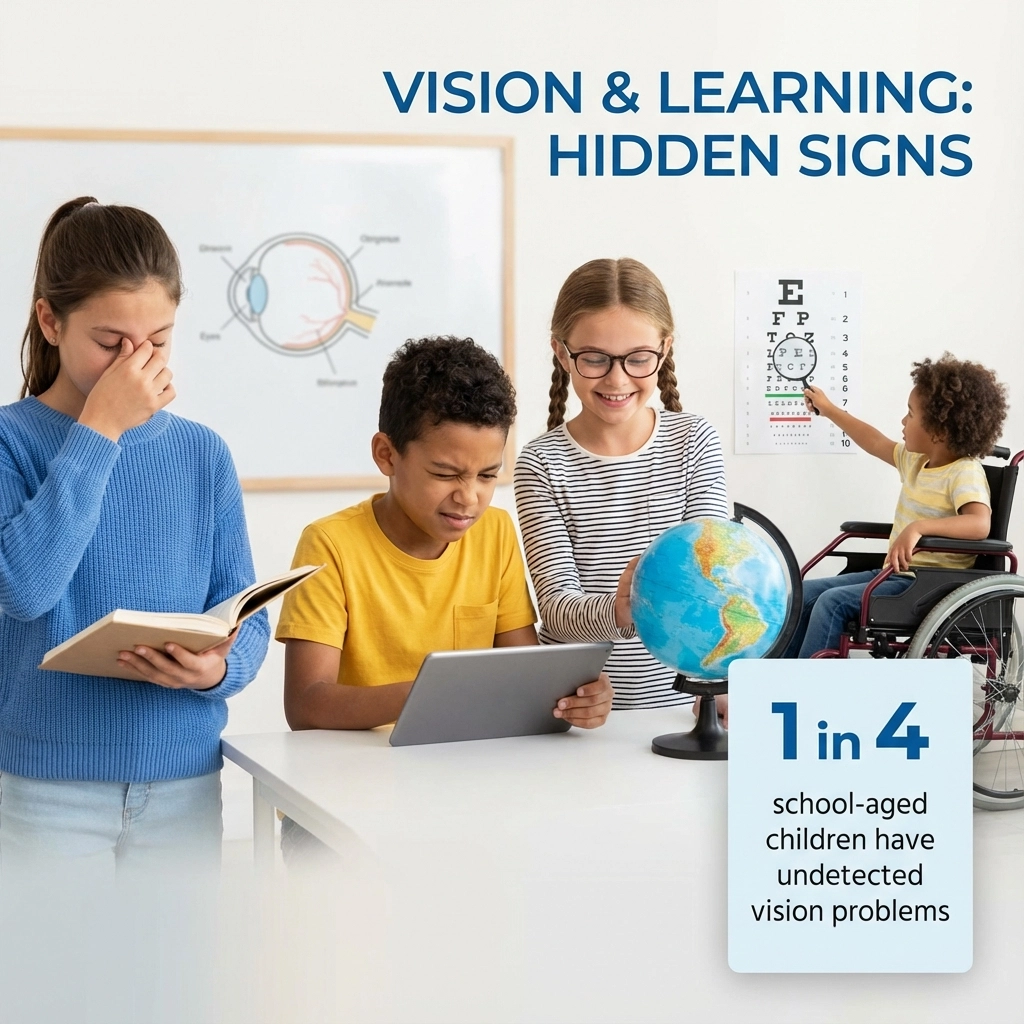
Here’s a startling fact many Suffolk and Franklin parents don’t realize: 1 in 5 children has an undetected vision issue, yet most children never complain about blurry vision. Instead, these eye problems often show up as behavior issues, academic struggles, or physical symptoms that send families searching for the wrong answers.
The truth is, childhood eye problems are master disguisers. They frequently mimic ADHD, learning disabilities, defiance, or lack of motivation—causing children to struggle unnecessarily in school while believing the problem is them, not their vision.
A qualified pediatric eye doctor can often uncover what standard screenings miss.
The “Problem Child” Who Actually Has Vision-Related Eye Problems
Excessive fidgeting, short attention spans during homework, and resistance to reading are often linked to eye problems, not behavioral disorders. When a child’s visual system is under strain, their body reacts—restlessness is often a sign of visual discomfort.
Dr. Belgrave, an Adult and Pediatric Eye Doctor with Ophthalmology Associates, graduated in the top 10% of his Harvard Medical School class for Ophthalmology and completed his residency at Mount Sinai. He has seen countless cases where children labeled as ‘difficult’ or ‘unfocused’ were actually dealing with undiagnosed eye problems that affected reading, attention, and classroom comfort.
“Children who constantly rub their eyes during reading, drawing, or screen time are showing us that their visual system is under stress,” Dr. Belgrave explains.
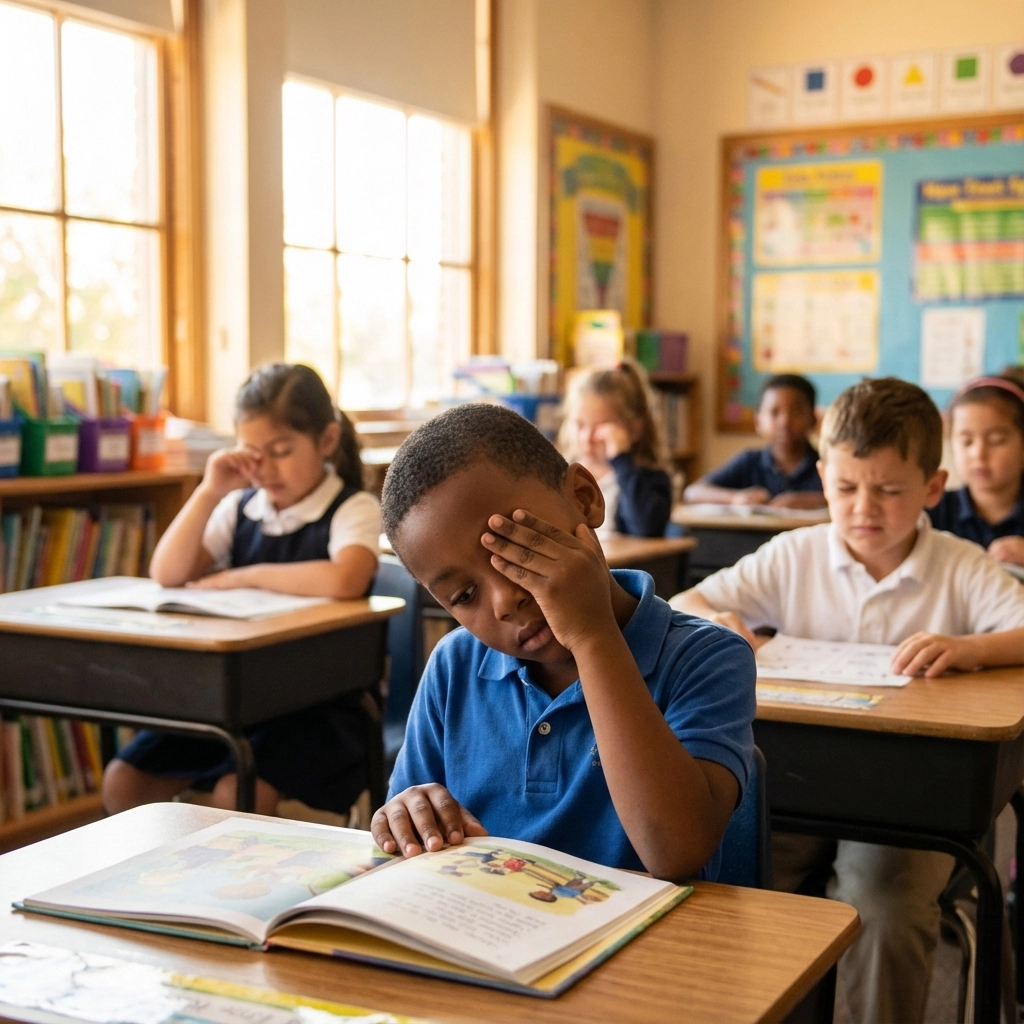
Watch for these unexpected behavioral red flags:
• Head tilting or turning consistently to one side when looking at books, screens, or the teacher
• Covering one eye unconsciously during activities requiring clear vision
• Quick loss of interest in tasks that require sustained visual attention
• Unusual crankiness or irritability after school or homework sessions
• Avoiding activities they once enjoyed, especially those requiring hand-eye coordination
Many Franklin and Suffolk families later discover these behaviors were coping mechanisms for untreated eye problems.
Academic Struggles That Aren’t Learning Disabilities
Reading difficulties are one of the most common signs of pediatric eye problems. A child may read words correctly but struggle to track lines, skip sentences, or lose their place repeatedly.
A pediatric eye doctor often finds that handwriting and spacing issues stem from visual-motor challenges, not intelligence. Children with untreated eye problems may:
• Write letters inconsistently large or small
• Have trouble staying within lines or margins
• Mix up similar-looking letters (b/d, p/q) well beyond the typical age
• Copy information incorrectly from the board despite paying attention
Declining grades despite obvious intelligence should prompt parents to consider vision screening. Even children with 20/20 distance vision can have significant eye problems related to focusing, eye teaming, or tracking—issues that school screenings do not detect.

The Hidden Physical Signs of Eye Problems Most Parents Miss
Chronic headaches after school rank among the most overlooked signs of pediatric eye problems. Unlike adults, children rarely connect their discomfort to visual strain: they just know they feel awful after trying to focus all day.
Light sensitivity, frequent blinking, excessive eye rubbing, or closing one eye to see better may all indicate underlying eye problems that require evaluation by a pediatric eye doctor.
Unusual eye movements or positioning often get dismissed as quirky habits. However, these compensations frequently indicate:
• One eye that turns inward or outward occasionally
• Frequent blinking or eye rubbing beyond normal levels
• Closing one eye to see better, especially when tired
• Moving their head instead of their eyes to track moving objects
For Suffolk families, seasonal factors can mask vision problems. High pollen counts in our area cause legitimate eye irritation, but persistent symptoms year-round warrant professional evaluation.
Why Eye Problems Go Undetected for So Long
Children adapt. They assume everyone sees the way they do, even when their vision isn’t normal. Because most eye problems develop gradually, parents often adjust to their child’s coping behaviors without realizing something is wrong.
High-achieving students are especially at risk. Many compensate until academic demands increase—often around third or fourth grade—when visual workload intensifies and eye problems finally surface.
To further clarify:
The adaptation factor explains why vision problems go undetected for years. Children don’t know what normal vision looks like, so they adapt their behavior and assume everyone experiences the same visual challenges.
Gradual onset makes detection even trickier. Unlike a sudden injury, most childhood vision problems develop slowly. Parents adjust to their child’s coping mechanisms: the head tilting, the close reading distance, the homework battles: without recognizing these as symptoms.
Intermittent symptoms create additional confusion. A child might see clearly when well-rested but struggle significantly when tired or stressed. This inconsistency often leads to assumptions about effort or motivation rather than vision capability.

What This Means for Suffolk and Franklin Families
At Ophthalmology Associates in Suffolk and Franklin, comprehensive eye examinations performed by a pediatric eye doctor often reveal eye problems in children who passed basic school vision screenings. School vision checks typically assess only distance vision, missing the focusing, tracking, and eye coordination issues that most significantly impact learning and classroom performance.
Our same-day contact lens prescriptions and in-house eyeglass services allow children to return to school quickly with proper vision correction. We accept over 95% of insurance plans, making comprehensive pediatric eye care accessible to families throughout Hampton Roads.
“The transformation in a child’s confidence and academic performance after addressing undiagnosed eye problems is remarkable,” notes Dr. Belgrave. “Children who believed they weren’t capable learners often discover they simply couldn’t see properly.”
Taking Action: What Suffolk and Franklin Parents Should Do
At Ophthalmology Associates in Suffolk and Franklin, comprehensive exams performed by a pediatric eye doctor regularly identify eye problems missed by school screenings.
School vision checks focus on distance clarity only. They do not test:
- Eye tracking
- Focusing stamina
- Eye coordination
- Visual processing efficiency
These are the exact skills children need to succeed academically.
Schedule comprehensive eye examinations annually rather than relying solely on school screenings. Early identification of eye problems can make a meaningful difference in academic success, comfort, and self-esteem.
Before your visit, note:
- When symptoms occur
- Which activities trigger discomfort
- Any compensatory behaviors you’ve observed
This information helps a pediatric eye doctor pinpoint the cause more efficiently.
For immediate concerns or to schedule your child’s comprehensive eye examination, contact Devon at our Suffolk or Franklin location. Devon provides 24/7 booking assistance and patient education (though not medical advice) to ensure your family gets the vision care support you need.
According to the CDC, many childhood vision conditions go undetected without comprehensive eye exams. Don’t let another school year pass with your child struggling unnecessarily. Many vision problems that impact learning are highly treatable once properly diagnosed: but only if we know they exist. If you have concerns about your child’s vision, learn more about our pediatric eye exams or schedule an appointment with our team.
Give Your Child the Clear Vision They Deserve
Dr. Claude Belgrave Jr., a pediatric eye doctor, and the team at Ophthalmology Associates and the team at Ophthalmology Associates provide comprehensive pediatric eye care for Suffolk and Franklin families. With advanced diagnostics and a child-centered approach, the practice focuses on identifying and treating eye problems that affect learning and development.
Call Devon 24/7 at 757-964-4393 or visit us online to schedule your child’s comprehensive eye examination. We accept over 95% of insurance plans and offer same-day contact lens prescriptions plus in-house eyeglass services.
Suffolk Location: 1200 N Main St, Suffolk, VA 23434
Franklin Location: 1500 Armory Dr, Franklin, VA 23851
Don’t wait: your child’s academic confidence and learning potential depend on clear, comfortable vision.
The information in this blog is for educational purposes only and should not replace professional medical advice. For personalized vision care recommendations, schedule a comprehensive examination with Dr. Belgrave and our team.
#PediatricVision #ChildrensEyeCare #SuffolkEyeDoctor #FranklinVision #BackToSchool #VisionProblems #EyeExam #LearningDifficulties #SchoolVision #Hampton Roads